

The next generation of spacecraft assembly starts with a screen, not a wrench.
Innovation drives every step of GPS IIIF production. From augmented reality (AR) goggles, immersive virtual reality (VR) labs, on-demand 3D printing and living digital twins, digital tools are slashing timelines, wiping out repetitive work and detecting potential challenges long before physical hardware is ever involved – enabling our teams to work smarter.
With today’s threat environment, staying on schedule is not enough. The mission depends on us to accelerate capability. Digital tools let us work smarter, ensuring GPS meets critical timelines for the nation’s needs.
Fang Qian - Vice President, Global Positioning System
Each immersive tool redefines what’s possible, equipping our engineers with new ways to innovate, adapt and deliver rapid results.
1. AR Takes Assembly from Days to Hours
A single GPS satellite carries more than two hundred precision-placed Velcro fasteners, each measured down to a millimetre. Previously, technicians spent several days measuring, marking, and verifying placement of each fastener,
Now, AR-enabled smart goggles overlay exact fastener locations in real time, removing the need for manual measurement.
The result?
- Fifty-two percent reduction in execution time
- Near-zero errors and rework
- Immediate confidence that every install matches the design.
By targeting high‑impact operations, AR is reshaping GPS workflow, maximising efficiency.
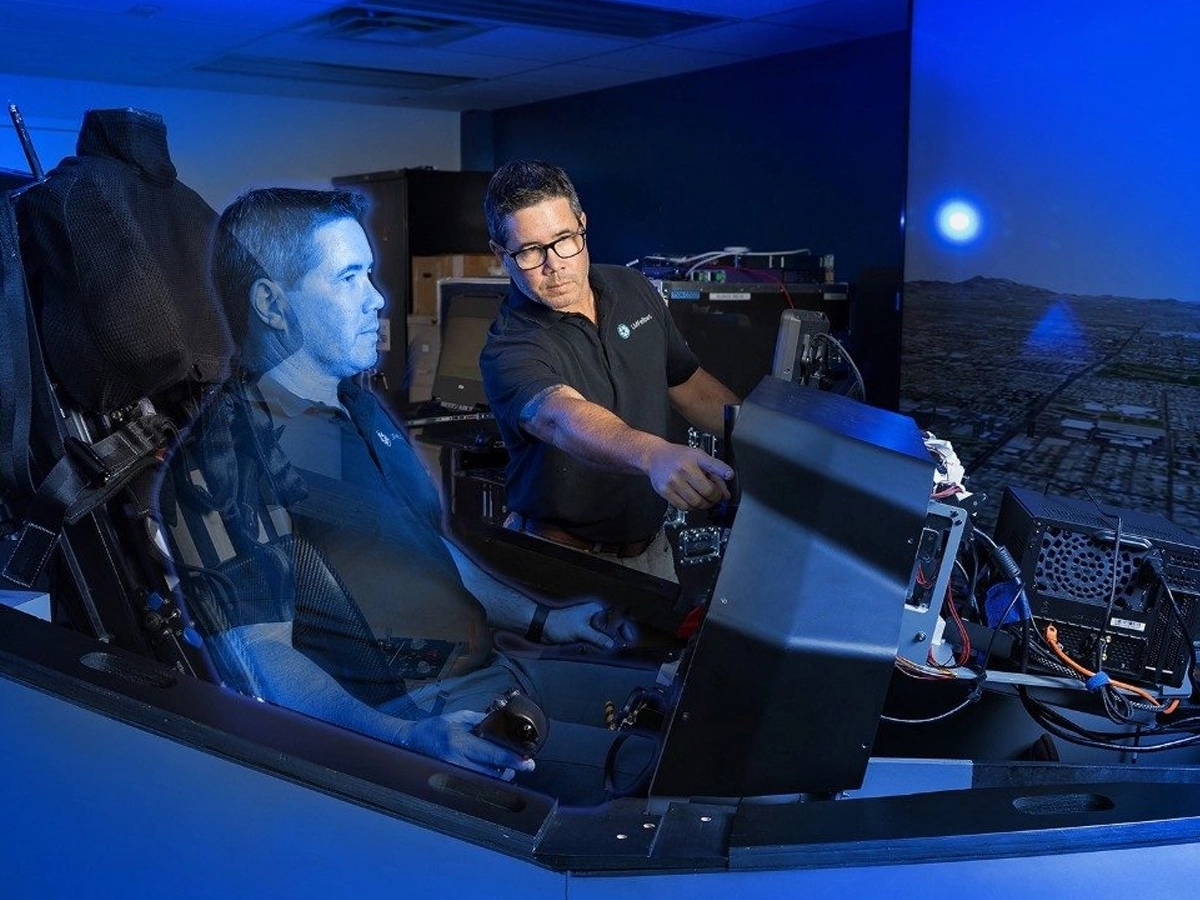
At Lockheed Martin’s Denver-based Computer Hardware in the Loop (CHIL) lab, our technicians can simulate production and processes long before they ever touch the real product.
2. Mastering Production with VR
At Lockheed Martin’s Denver-based Computer Hardware in the Loop (CHIL) lab, our technicians can simulate production and processes long before they ever touch the real product.
VR empowers our engineers to:
- Practice disassembly and reassembly of the hardware in a risk-free environment.
- Identify integration challenges early, preventing costly roadblocks.
- Simulate unusual scenarios, like receiving delayed parts, to validate access and determine proper tooling.
3. Driving Down Costs with 3D Printing
We sent the first 3D-printed Global Positioning System (GPS) metallic part to space aboard GPS III SV10 earlier this year. The 3D-printed omni antenna, which enables communication relay, proved that producing the antenna in this way realises a multitude of benefits, including:
- Forty percent reduction in production cost versus traditional machining
- Simplifying a complex manufacturing process down to a single automated process
- Production scalability across the entire GPS IIIF fleet
4. Real-Time Alignment with Digital Twins
Innovative advancements, like using high-fidelity digital twins that mirror the satellite's physical state in real time, are currently being piloted by our experts. Leveraging a living digital twin equips our team to:
- Run simulations and software updates on the virtual model before implementing aboard hardware.
- Keep the physical spacecraft and digital counterpart in lockstep from early production through launchpad and beyond.
Lockheed Martin continues to invest in emerging technology that makes the systems we rely on safer, more connected, and future ready.


Update Comment